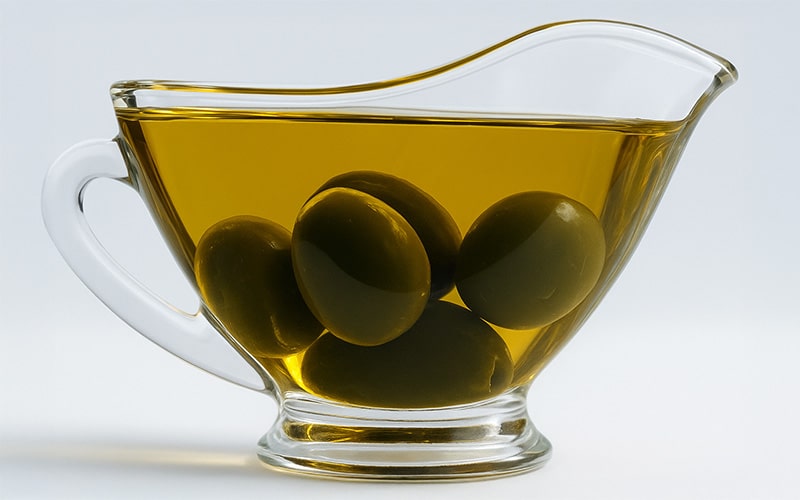
Olive oil is known as one of the healthiest fats you can consume. This is mainly due to its unique composition of fatty acids. Olive oil contains many monounsaturated fats, such as oleic acid. These fats help the body balance cholesterol levels.
In addition, olive oil is full of antioxidants and polyphenols. These are plant substances that help protect your body from harmful external influences. Especially extra virgin olive oil contains many of these substances, because it is cold-pressed without heating. This way, the nutrients are well preserved.
Olive oil is also an important part of the Mediterranean diet. This diet is praised worldwide for its positive effect on health, especially on the heart and blood vessels.
Several studies show that olive oil has health benefits. Regular consumption can help reduce the risk of cardiovascular disease. This is because olive oil lowers LDL cholesterol and supports HDL cholesterol.
Olive oil also has anti-inflammatory properties. The antioxidants in olive oil can help reduce inflammation in the body, which is important in preventing chronic diseases.
In addition, there is evidence that olive oil can help maintain cognitive functions. Think memory, concentration and brain health in ageing.
There are different types of olive oil, such as regular, virgin and extra virgin. But which olive oil is the healthiest?
The healthiest choice is extra virgin olive oil. This oil comes from the first pressing of the olives and is cold-pressed. This means that no heat or chemicals are used. As a result, flavour and nutrients are optimally preserved.
Ordinary olive oil is usually refined, which means that many of the good substances disappear during the process. Virgin olive oil is already a step better, but if you really want the best for your health and taste buds, extra virgin is the way to go. It is pure, powerful and exactly as olive oil is meant to be.
First pressing means that the oil comes from the very first mechanical pressing of the olives. This releases the purest oil, with the most nutrients.
Cold-pressed means that this is done at a low temperature, so the oil does not oxidise or lose nutrients. This process is essential for maintaining the health benefits of olive oil.
When buying olive oil, pay attention to a few smart things:
Some people drink a tablespoon of olive oil daily. But is drinking olive oil healthy? Yes, provided you choose extra virgin quality. That way you get the most healthy fats and antioxidants.
You don't necessarily have to drink olive oil pure. You can also easily incorporate it into your food. Think salads, grilled vegetables or a dash through soup. That way, you can enjoy its benefits on a daily basis.
The European Food Safety Authority (EFSA) recommends 2 tablespoons of olive oil per day. That is about 20 grams. The oil must then contain at least 250 mg/kg of polyphenols to provide health benefits.
Which is healthier, olive oil or sunflower oil? Both oils are vegetable, but olive oil contains mostly monounsaturated fats, while sunflower oil is rich in omega-6 fatty acids.
Extra virgin olive oil also contains far more antioxidants than sunflower oil. Also, olive oil is more stable when heated.
Want to know more about this? Then read our blog: Olive oil or sunflower oil: what's the difference and healthier?
Olive oil is heart healthy, but as with everything: too much is never good. One tablespoon easily contains around 90 calories. So yes, it is nutritious, but also quite energy-rich. So a bit of care, especially if you are watching your calorie intake.
Also, not every bottle that says 'extra virgin' is automatically top quality. The differences between brands can be quite big. So always check the origin, the vintage and whether the bottle is well protected from light. That way you can be sure you have the right one.
Yes, absolutely. Olive oil is healthy, especially if you choose a good extra virgin variety. It is kind to your heart, helps protect your body from inflammation and is packed with antioxidants.
Feel free to use it every day, but don't overdo it. Choose quality over quantity, and combine it with a varied diet. Then get the most out of this liquid all-rounder.
Yes, extra virgin olive oil is suitable for frying on low to medium heat. It is stable up to about 180 degrees. Read more in our blog: Olive oil or sunflower oil: what's the difference and healthier?
Yes, olive oil is good for your skin. It contains vitamin E and antioxidants that can soften the skin and protect it from drying out. Use it as a natural moisturiser or mask, especially for dry skin.
Olive oil is also a natural care for your hair. It nourishes dry ends and makes hair softer. Apply a little oil, let it soak in and then rinse well.
Yes, olive oil can support digestion. It helps with regular bowel movements and has a mild anti-inflammatory effect. Some people take a spoonful on an empty stomach for extra support.
Yes, olive oil helps balance cholesterol levels. It lowers LDL cholesterol and supports HDL cholesterol. Thus, it contributes to healthy blood vessels and a strong heart.
Always stay up-to-date with our promotions and news items

