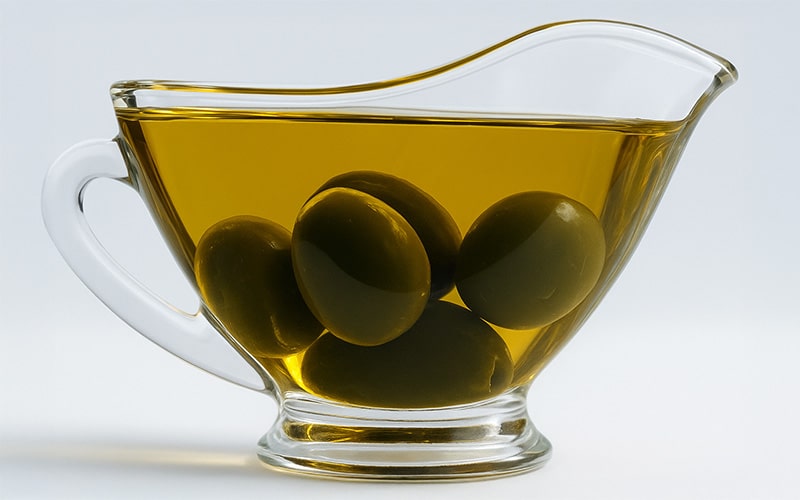
Refined olive oil is a processed form of olive oil. It is made from olives that are not suitable for direct pressing into extra virgin olive oil. These olives often yield an oil with high acidity or an unpleasant smell and taste. A process of refining cleanses the oil so that it still becomes usable for consumption.
This processing removes the sharp flavours and odours that arise from poor harvesting conditions or over-ripe olives. The result is a light, neutral oil that is good to use in cooking.
Not every olive oil comes out of the press perfectly. Oil from damaged or overripe olives, also known as lampante oil, is too acidic and bitter to eat directly. Refining can purify this oil and make it safe for consumption.
So the purpose of refining is not to make the oil better than extra virgin olive oil, but to make lesser-quality oil still usable. This avoids waste and allows the oil to be used for frying, roasting or industrial applications.
Although both products come from the olive, they differ considerably in quality, taste and nutritional value.
Production method:
Extra virgin olive oil is obtained purely mechanically by cold-pressing fresh olives, without the addition of heat or chemicals. Refined olive oil is instead processed with heat and filtration to remove impurities and fragrances.
Flavour and aroma:
Extra virgin olive oil has a distinct, fruity flavour that can sometimes be slightly bitter or peppery.
Refined olive oil actually tastes neutral. This makes it suitable for dishes where you don't want to taste an olive flavour, such as when frying pancakes or meat.
Nutritional value and health:
During refining, many antioxidants, polyphenols and vitamins are lost. As a result, refined olive oil contains fewer healthy substances than extra virgin olive oil. Nevertheless, it remains a better alternative than animal fats or trans fats because it is still rich in monounsaturated fatty acids.
Quality standards:
Extra virgin olive oil must meet strict requirements, with acidity below 0.8%.
Refined olive oil is allowed to have higher acidity and is often blended with a small percentage of extra virgin olive oil for a milder flavour. You can often find such blends in the supermarket as “mild olive oil” or “pure olive oil”.
Use in the kitchen:
Extra virgin olive oil is ideal for cold applications, such as salads or dips, and for light heating.
Refined olive oil is more resistant to high temperatures and thus more convenient for frying.
Many people wonder if refined olive oil is healthy. The short answer: yes, but less than extra virgin olive oil.
During refining, antioxidants, polyphenols and vitamins are largely lost. As a result, refined olive oil contains fewer substances that help protect cells and fight inflammation.
Yet that does not mean it is unhealthy. Refined olive oil still contains monounsaturated fats, such as oleic acid. These fats help maintain cholesterol levels and are better for your heart than saturated fats or butter.
Conclusion: refined olive oil is not unhealthy, but less nutritious than extra virgin olive oil. Think of it as a practical oil for daily use, not a superfood.
For consumers, it is mainly about use and taste. Refined olive oil is softer, more neutral and often a lot cheaper than extra virgin olive oil.
When do you choose refined olive oil?
If you bake or deep-fry daily, or prefer not to have a distinct olive flavour in your dish, refined olive oil is a logical choice. It is also an affordable option for large quantities in the kitchen.
When is it better to avoid it?
If you want to use olive oil for cold dishes, salads or as a seasoning, choose extra virgin. It is richer in aroma, colour and healthy substances.
The label tells you a lot about what is in the bottle. Refined olive oil is rarely literally called that. Therefore, pay attention to terms like:
Pomace (or sansa): made from olive residue, always refined.
Pure olive oil: usually a mixture of refined and a little extra virgin olive oil.
Light olive oil: not lighter in calories, but refined and milder in taste.
Extra virgin: unrefined and of the highest quality.
Yes, in most cases they do. Both oils contain unsaturated fats, but olive oil contains more monounsaturated fatty acids and less omega-6. As a result, it is often better for the heart.
Refining makes lower-quality oil suitable for consumption. This avoids waste and allows the oil to be used safely for cooking or frying.
Use refined olive oil at temperatures up to about 220 °C. It is excellent for frying, roasting and even deep-frying.
Always stay up-to-date with our promotions and news items