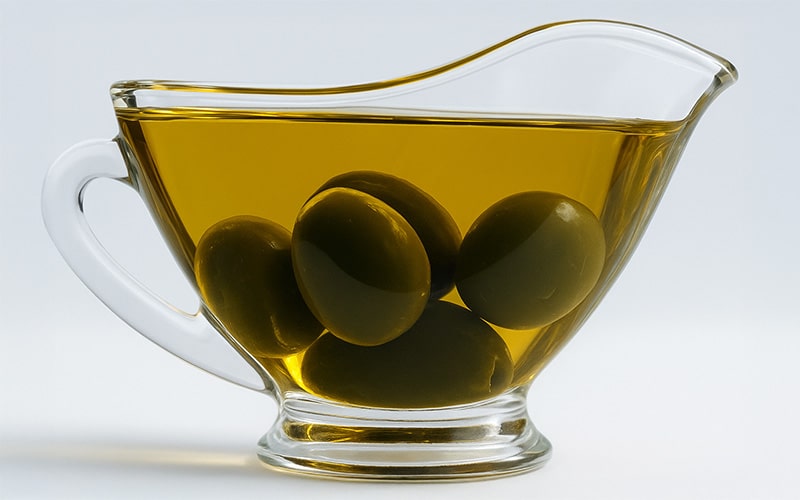
Olive oil and sunflower oil are both vegetable oils, but they differ greatly in origin and properties. Olive oil is extracted from the flesh of olives (the fruit of the olive tree), while sunflower oil is extracted from the seeds of the sunflower. This difference in source and production process creates different characteristics in taste, smell, colour and use. Those wondering which is better: olive oil or sunflower oil, quickly arrive at the difference olive oil and sunflower oil. Below, we look at the main differences.
Olive oil - from olive to oil: Olive oil (especially extra virgin olive oil) is traditionally made by harvesting and cold-pressing olives. With high-quality oil, such as Sidi organic olive oil from Tunisia, this is done with care: the olives are picked by hand and mechanically pressed within a short time, without heating or chemicals. This artisanal process preserves the flavour and nutrients of the olive. Extra virgin olive oil is in fact pure olive juice: a first pressing that has not been refined. This matches the values of craftsmanship and sustainability; for example, Sidi olive oil is hand-harvested and cold-pressed, which improves purity (no unnecessary oxidation or additives).
Sunflower oil - from seed to oil: Sunflower oil is extracted from sunflower seeds. After pressing the seeds, oil often remains in the press cake, which is why, in practice, high-pressure extraction and solvents (such as hexane) are often used to extract all the oil. Next, crude sunflower oil is usually refined: heated, filtered, deodorised and bleached. This refining process produces a bright yellow, neutral oil with no strong odour or taste, but it also means that the oil has been intensively processed. Unlike cold-pressed olive oil, standard sunflower oil production involves high temperatures and chemicals. This is more efficient for mass production, but it also removes some of the natural micronutrients and can introduce small amounts of unwanted substances. In contrast, at Sidi, a conscious decision is made to process the oil minimally, without chemical intervention -a more sustainable approach befitting fair production.
Due to the difference in raw material and processing, you can easily recognise olive oil and sunflower oil by their appearance and aroma. Extra virgin olive oil usually has a green-gold colour that can vary depending on the olive variety and harvest time. The aroma is fruity, grassy or peppery, and the taste full, aromatic and sometimes slightly bitter or spicy at the back of the throat. These characteristic flavourings (such as oleocanthal) give good olive oil its unique profile. Sunflower oil, on the other hand, is usually pale yellow in colour and almost odourless. Its flavour is neutral; many people would hardly be able to tell it apart in a blind test. It is precisely this neutral flavour that makes sunflower oil versatile in dishes where you don't want extra flavour from the oil. You often use olive oil also for its flavour - think of a dash over a salad or bread. You don't actually taste sunflower oil in a dish, which is sometimes an advantage, but also means you miss that extra taste sensation.
Because olive oil and sunflower oil differ so much in taste and properties, it is smart to know when which oil is best. Olive oil (especially extra virgin) likes to be used in cold preparations or at the end of a dish: over salads, roasted vegetables, pasta or as a dip with bread. The rich flavour then really adds something. You can also use olive oil for light frying or sautéing of vegetables, fish or meat - you then get both the cooking function and a nice flavour addition. Sunflower oil is useful when you need a high heat or neutral touch. For example, in deep frying, high-temperature wok dishes, or in baking (cakes, pancakes) where you don't want to taste an olive flavour, many people reach for sunflower oil. Think of the difference between a Mediterranean style (richer flavour, olive oil) and a neutral Dutch pancake (which often uses sunflower oil or butter). Incidentally, one does not exclude the other: many home cooks have both oils at home and use olive oil or sunflower oil depending on the dish.
When comparing olive oil vs sunflower oil, it is not just about taste or application in cooking, but mainly about nutritional value. Both oils contain fats, but the type of fatty acid and the presence of vitamins differ significantly. A tablespoon (10 grams) of both oils provides about the same number of calories (90 kcal), but the composition of the fats is different. Olive oil contains more monounsaturated fatty acids, while sunflower oil is richer in polyunsaturated fatty acids such as omega 6. As you can see, there are also differences in terms of vitamins. Sunflower oil contains more vitamin E, while olive oil contains slightly more omega-3 and traces of vitamin A.
Table 1. Nutritional value of sunflower oil and olive oil per tablespoon (10g)
| Sunflower oil | Olive oil | |
| Energy | ± 90 kcal | ± 90 kcal |
| Protein | 0,03 g | 0 g |
| Carbohydrates | 0,02 g | 0 g |
| Fat | 9,95 g | 10 g |
| Of which saturated | 1,17 g | 1,43 g |
| Omega-3 fatty acids | 0,1% | 0,5% |
| Vitamin A | 0 µg | 0.4 µg |
| Vitamin E | 7.6 mg | 0.51 mg |
| Vitamin K | 5.37 µg | 0.57 µg |
Then the big question: which oil is healthier? There are many opinions on this, but let's look at scientific findings and advice from nutritionists. Both olive oil and sunflower oil have a healthy image compared to, say, butter or coconut oil, mainly because they are low in saturated fat. Yet extra virgin olive oil is often put forward as an essential part of a healthy diet. We discuss the effects on cardiovascular health, inflammation and list the health benefits of both oils.
The good news is that both olive oil and sunflower oil fit well into a healthy diet. They contain mostly unsaturated fats, which help lower LDL cholesterol (the "bad" cholesterol). Especially if you use olive oil or sunflower oil instead of butter or other saturated fats.
Yet olive oil scores just a little higher in many studies. A daily tablespoon of olive oil is linked to a lower risk of heart disease. This is mainly due to its high oleic acid (omega-9) content and the presence of antioxidants such as polyphenols, which have a beneficial effect on blood pressure and blood vessels. Sunflower oil also contains healthy fats and lots of vitamin E, but lacks those extra protective substances.
When heated, olive oil is also a bit more stable. Sunflower oil is more susceptible to oxidation at high temperatures, especially if you use the oil more often (such as in a frying pan). Extra virgin olive oil retains better quality when used normally in the pan.
Summary: Both oils are healthier than animal fats, but olive oil offers just a bit more health benefits. Especially in the long run.
Another difference is in how the oils deal with inflammation in the body. Indeed, chronic, mild inflammation plays a role in diseases such as heart problems or rheumatism. In addition, extra virgin olive oil contains polyphenols such as oleocanthal. This is a substance similar to ibuprofen: it naturally inhibits inflammation. This is why some olive oils make you feel a slight tingle in your throat. This is a good sign.
Sunflower oil does not contain such substances, but it does contain a lot of vitamin E, which also acts as an antioxidant. Yet sunflower oil has relatively high levels of omega-6 fatty acid (linoleic acid) and if you take in too much of that without enough omega-3, it can actually fuel inflammation.
The bottom line: olive oil has an anti-inflammatory effect and is therefore often a better choice, especially if you use it daily. Sunflower oil is not unhealthy, but use it in moderation and make sure to balance your vitamin.
Whether you want to fry a fish, make pancakes or deep-fry a dish: the choice between olive oil and sunflower oil often raises questions. Which is better for frying: sunflower oil or olive oil? And which oil is best for deep-frying or frying? The differences between these oils are bigger than you think.
Frying in sunflower oil or olive oil is all about flavour and temperature. Olive oil has a distinct, often fruity flavour that you taste in your dish. That makes it ideal for Mediterranean dishes, vegetables or eggs. Sunflower oil, on the other hand, has a neutral flavour and is therefore more suitable if you don't want to taste the oil. Think for example when you want to bake pancakes or cake.
Sunflower oil is the best oil for deep frying when you consider heat resistance, price and taste neutrality. Deep-frying is all about heat resistance. Therefore, the smoke point of an oil is crucial here. Sunflower oil is one of the best choices for deep frying as it has a high smoke point of around 225°C and is neutral in flavour. Peanut oil (peanut oil) and rice oil are also suitable, but less common in Dutch cooking. Extra virgin olive oil is less suitable for deep-frying, as its smoke point is quite low (±160-190°C). At higher temperatures, the oil can burn and develop bitter flavours, as well as producing undesirable substances.
Frying is a cooking technique that involves searing meat or vegetables over medium-high to high heat, often followed by longer cooking. For this, you need an oil that can withstand heat and possibly add some flavour.
For mild frying (such as chicken or vegetables), you can use olive oil just fine. Preferably a mild or refined variety with a higher smoke point.
For vigorous searing (such as red meat), sunflower or peanut oil is often better, due to their high smoke point and neutral flavour.
So which oil is best for frying depends on your dish. Olive oil gives character and is healthier, but sunflower oil offers more stability at higher temperatures.
Olive oil and sunflower oil are both vegetable oils, but differ significantly in origin, flavour, production method and health effects. In the kitchen, choose olive oil when looking for flavour and a healthy fat profile, especially for salads or light preparations. Sunflower oil is more likely to be used for baking, frying and deep-frying due to its neutral flavour and high heat tolerance.
In terms of health, extra virgin olive oil scores slightly better, partly because of its antioxidants and monounsaturated fatty acids. Sunflower oil, on the other hand, contains more vitamin E and omega 6.
So which oil is better depends on your goal. For flavour and health benefits in a Mediterranean diet, olive oil is an excellent choice. For neutral frying or deep-frying, sunflower oil is more convenient. Many people therefore consciously choose both oils in their cooking.
Finally, quality matters. When it comes to olive oil, choose a good extra virgin variety. These contain the most flavour and nutritional value. For sunflower oil, look for high oleic acid varieties or organic cold-pressed oil if you are looking for a healthier alternative to the standard supermarket variety. Ultimately, the best oil for your kitchen is the one that suits your use ánd has been produced with care. Sidi believes in the power of an honestly produced olive oil: from hand-picked Tunisian olives to sustainable cultivation without chemicals. You can taste this dedication, and your body reaps the benefits.
Always stay up-to-date with our promotions and news items