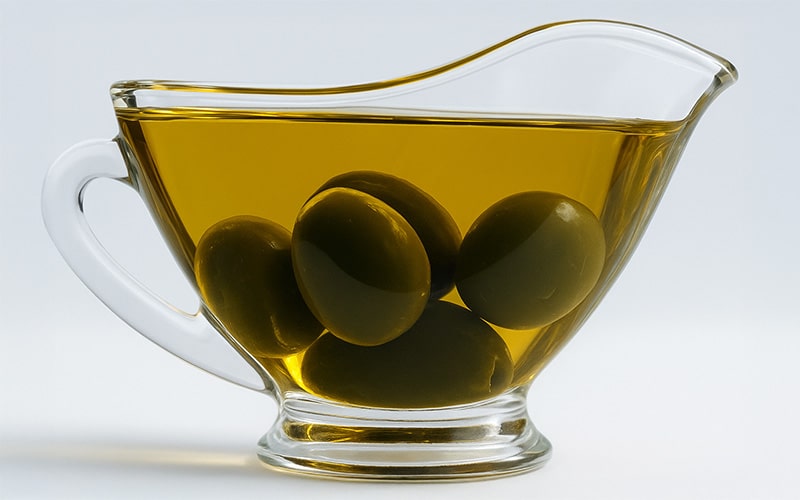
Olive oil is a pure oil (100% fat) and therefore provides relatively high calories. One tablespoon of olive oil weighing around 10 grams contains around 90 kilocalories (kcal). In comparison, a teaspoon (± 5 grams) contains around 45 kcal. The table below shows the number of kcal in olive oil per standard serving:
| Amount of olive oil | Kilocalories (kcal) |
| 1 teaspoon olive oil (±5 ml) | ± 45 kcal |
| 1 tablespoon of olive oil (±10 ml) | ± 90 kcal |
| 100 g olive oil (≈ 110 ml) | ± 884 kcal |
As you can see, olive oil is very high in calories. Olive oil has almost 900 kcal per 100 grams. This applies to almost all types of olive oil, whether extra virgin or refined. The calorie content hardly varies by brand or type. A tablespoon of olive oil provides about 90 kcal. This is regardless of whether you use a house brand or a premium olive oil like Sidi's. After all, calories are tied to fat content, which is similar in all pure olive oils.
Often, 1 tablespoon is equated to ±15 millilitres (ml). Olive oil is slightly less dense than water, so 15 ml of olive oil weighs about 13-14 grams. In nutrition tables, however, people usually calculate with 1 tablespoon = 10 grams of olive oil. The Nutrition Centre, for example, uses 10 grams per tablespoon, which corresponds to 90 kcal as mentioned above. For completeness, it is worth noting that a teaspoon is about 5 ml. This amounts to about 4-5 grams of olive oil.
Why is this important? Many people use a tablespoon or teaspoon as a measure of oil when cooking. If you want to know how many calories you take in, you need to convert that measure to grams and kcal. A 10-15 ml tablespoon of olive oil equals about 90 kcal and a teaspoon around 45 kcal. By knowing these portions, you can better estimate how much energy you add to your meal when you use olive oil.
Olive oil contains a lot of calories in a small amount. One tablespoon of olive oil contains about 90 calories. That may sound like a lot, but these calories come from healthy, unsaturated fats. Whether you gain or lose weight from a tablespoon of olive oil depends entirely on your total calorie intake and energy consumption. Research on the Mediterranean diet shows that olive oil, if used in moderation, can actually contribute to a healthy weight. This is because the fats in olive oil are satiating, making you less likely to crave sugary snacks.
Olive oil may have a "healthy image", but it is still a high-fat food. Still, olive oil can fit nicely into a diet to lose weight, provided you use it in moderation. Obviously, the calories count in your daily total, so overuse can get in the way of weight loss. Compared to unhealthy fat sources (such as butter or margarine), olive oil is a better choice because of its healthy unsaturated fats. These fats have beneficial effects on your heart and cholesterol and fit within a responsible diet.
Olive oil provides mostly monounsaturated fats, which are beneficial for your cholesterol and heart health. These fats also keep you satiated for longer. Unlike fast carbohydrates, which cause your blood sugar to spike and then quickly drop, fats like those in olive oil provide a longer-lasting feeling of energy. This satiating effect can help you snack less and thus reduce your overall calorie intake. This is therefore an important factor in losing weight.
Olive oil is a healthy fat, but it does contain a lot of energy. One tablespoon of olive oil contains about 90 kcal on average. That means you'll quickly take in extra calories if you pour generously. According to the Mediterranean diet, the guideline is often around 1 to 3 tablespoons per day. In countries around the Mediterranean, this is even the standard amount for use in salads, in cooking and baking, or as a seasoning over bread and vegetables. The amount suitable for you depends on your energy needs and goal (lose weight, maintain weight or gain weight). Therefore, use olive oil as a replacement for unhealthy fats or sauces, not as an extra addition on top of your normal diet.
The Nutrition Centre advises adults to get about 40 grams of fat from healthy sources every day, part of which can come from unsaturated fats such as olive oil. This amounts to 1-2 tablespoons a day, depending on what else you eat.
Harvard T.H. Chan School of Public Health highlights that at least half a tablespoon of olive oil a day can contribute to a lower risk of cardiovascular disease, provided this fat replaces other, less healthy fats.
Using olive oil in cooking:
Olive oil is best known for its calories. One tablespoon of olive oil contains about 90 kcal. Those calories come almost entirely from fats and this is a beneficial composition that fits within a healthy diet. Some of the fats in olive oil are saturated fat. Most of it consists of monounsaturated fats. In addition, olive oil also contains polyunsaturated fats. Furthermore, olive oil does not contain carbohydrates, protein and sugars. However, it does provide small amounts of vitamins A, E and K. These vitamins are important for protecting body cells and normal blood clotting, among other things. Finally, olive oil also contains Omega-3 fatty acids.
Table 1. Nutritional value of sunflower oil and olive oil per tablespoon (10g)
| Sunflower oil | Olive oil | |
| Energy | ± 90 kcal | ± 90 kcal |
| Protein | 0,03 g | 0 g |
| Carbohydrates | 0,02 g | 0 g |
| Fat | 9,95 g | 10 g |
| Of which saturated | 1,17 g | 1,43 g |
| Omega-3 fatty acids | 0,1% | 0,5% |
| Vitamin A | 0 µg | 0.4 µg |
| Vitamin E | 7.6 mg | 0.51 mg |
| Vitamin K | 5.37 µg | 0.57 µg |
Always stay up-to-date with our promotions and news items